
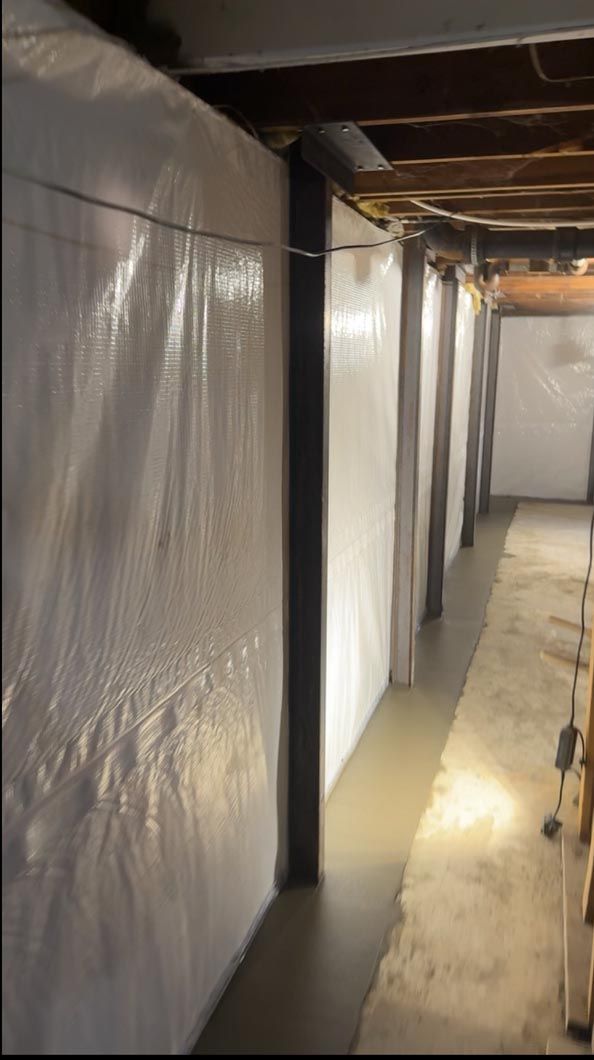
Water Redirected Before It Reaches Living Spaces
Interior Waterproofing Systems in Kansas City for managing ongoing basement seepage and moisture intrusion during seasonal weather changes
Interior waterproofing systems capture water at the point where it enters your basement and redirect it to a drainage system before it surfaces on floors or walls. Steadfast Structural LLC installs these systems for Kansas City homeowners dealing with persistent moisture problems that exterior fixes haven't resolved. The systems work by creating a controlled path for water to follow, intercepting it beneath the floor slab or along the wall-floor joint where hydrostatic pressure forces it through foundation seams.
The installation process involves cutting a channel along the basement perimeter, installing a drainage track that collects water, then connecting that track to a sump pump basin. Water flows into the track, travels to the basin, and gets pumped out before it ever reaches your usable basement space. Systems integrate with sump pumps to provide complete water control.
Arrange a basement inspection to identify seepage patterns and determine where interior drainage will intercept water most effectively.
What You Notice Once Drainage Systems Are Finished
Interior drainage systems remain hidden beneath a restored concrete floor, with only the sump pump and discharge line visible. The system operates passively, collecting water as it enters and routing it to the pump without requiring homeowner intervention. Because installation happens inside the basement, it avoids the extensive excavation required for exterior waterproofing and can be completed regardless of outdoor weather conditions.
Once the system is operational, basement floors stay dry during rainstorms, damp walls dry out as hydrostatic pressure is relieved, and the persistent moisture smell disappears. You can finish the basement or use it for storage without worrying about water damage to belongings.
Interior systems address water after it penetrates the foundation but before it causes damage, making them ideal for homes where exterior drainage improvements aren't feasible. The system's effectiveness depends on proper grading and gutter maintenance to minimize the water volume reaching the foundation in the first place.
Questions Before Starting Your Project
Homeowners evaluating interior waterproofing systems want to understand installation impact, long-term performance, and how these systems compare to exterior solutions.
What does interior waterproofing installation involve?
Installation requires cutting a channel along the basement perimeter, placing drainage track in that channel, connecting the track to a sump basin, then restoring the floor with new concrete. The process typically takes two to three days.
How does interior drainage differ from exterior waterproofing?
Interior systems manage water after it passes through the foundation, redirecting it before it surfaces. Exterior systems prevent water from reaching the foundation walls. Both approaches can work together for comprehensive protection.
Will installing interior drainage disrupt finished basements?
Installation requires removing flooring along the perimeter and cutting into the concrete slab. Finished walls and central living spaces remain intact, but perimeter areas need restoration afterward.
How do interior systems handle high water volume during storms?
Systems are sized based on expected water inflow and connect to sump pumps with sufficient capacity to remove water faster than it accumulates, even during Kansas City's heaviest spring rains.
What maintenance do interior waterproofing systems require?
Sump pump testing, drainage channel inspection, and periodic cleaning of the pump intake ensure reliable operation. Most systems require minimal maintenance once installed.
Steadfast Structural LLC designs interior waterproofing systems based on your basement's layout and the moisture patterns identified during evaluation. Contact us to discuss how interior drainage can provide long-term protection and improve your basement's usability year-round.