
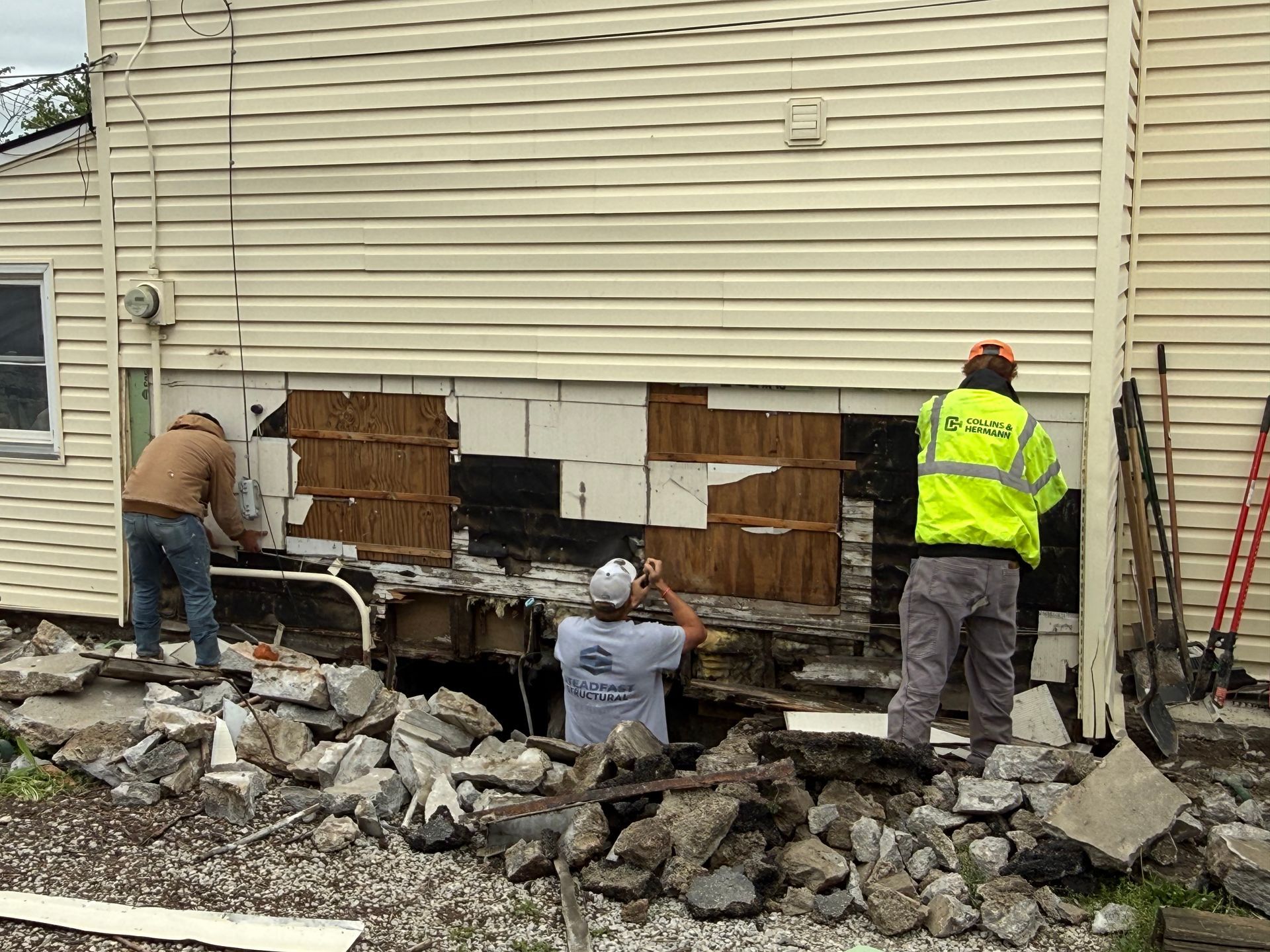
Rot That Reaches Framing Requires More Than Surface Work
Wood Rot Repair for homes with soft framing members, deteriorating sill plates, or moisture-damaged structural components discovered during inspection
Wood rot in a home's structural framing is not a finishing problem — it is a load-bearing problem. When fungal decay reaches sill plates, rim joists, posts, or floor framing, the affected wood loses its compressive and tensile strength, and the members can no longer carry their intended load. Steadfast Structural LLC performs wood rot repair for homeowners who have identified decay during renovation, inspection, or after noticing soft spots, discoloration, or material that crumbles when probed. The Kansas City region's combination of warm, humid summers and wet springs creates favorable conditions for the Basidiomycete fungi responsible for most structural wood decay — particularly in crawl spaces, at grade-level framing, and anywhere water intrusion goes unaddressed for an extended period.
Two distinct decay types appear in this region's housing stock: brown rot, which breaks down the cellulose in wood and causes it to cube and crumble, and white rot, which attacks lignin and leaves wood with a stringy, spongy texture. Both types destroy structural capacity, but they progress differently and often indicate different moisture sources. Brown rot is more common in crawl space framing exposed to ground moisture, while white rot tends to follow persistent liquid water intrusion — typically from roof drainage, plumbing leaks, or grading issues that direct surface water toward the foundation. Identifying the decay type and its moisture source is part of the repair process, because replacing wood without addressing the cause produces the same outcome within a few years.
Arrange an on-site evaluation to assess which framing members have been affected and what moisture source is driving the decay.
How Wood Rot Repair Addresses Structural Capacity
The repair process begins by probing and testing the extent of decay beyond what is visually obvious — rot frequently travels further along a member than surface appearance suggests, particularly in horizontal framing where moisture sits rather than drains. Once the full scope is mapped, compromised sections are removed and replaced with pressure-treated lumber appropriate for the contact condition. For sill plates in contact with concrete, this typically means lumber rated for ground contact. For above-grade framing in a crawl space, the selection depends on whether the corrected moisture source justifies standard replacement or whether upgraded treatment is warranted as a long-term precaution.
Once repair is complete, the affected area will test solid when probed and will no longer show the visible surface characteristics — softness, discoloration, or material separation — that indicated active decay. Steadfast Structural LLC assesses the full load path through each repaired member to confirm the replacement installation restores the original structural capacity rather than simply filling the gap left by removed material.
Wood rot repair often involves coordination with adjacent work: correcting the moisture intrusion point, installing or improving vapor barriers, or improving drainage around the foundation perimeter. These are not separate projects — they are part of resolving the condition rather than patching its result. The repair scope presented after evaluation will reflect what is needed to address both the damaged framing and the conditions that allowed decay to establish.
Questions Before Starting Your Wood Rot Project
Wood rot repair raises practical questions about process, timing, and what to expect during the work. Here are the most common ones addressed directly.
What causes wood rot in structural framing?
Fungal decay requires four conditions: wood, oxygen, warmth, and sustained moisture above 19 percent. Crawl spaces that lack adequate vapor barriers or ventilation frequently maintain wood moisture levels that support active fungal growth throughout the humid season.
How far does rot typically spread beyond the visible damage?
In horizontal members like sill plates and rim joists, decay can extend 12 to 18 inches beyond the visibly affected zone. Probing with a screwdriver or awl along the member reveals where solid wood fiber resumes.
When should wood rot repair be treated as urgent?
When decay is present in sill plates, main beams, or posts carrying floor loads, repair should be prioritized — these members have no redundancy, and continued loading of compromised sections accelerates deflection and increases the risk of sudden failure.
How is the moisture source identified before repairs are made?
The pattern and location of decay indicates the source. Decay concentrated at the perimeter framing near the foundation typically points to exterior drainage or grading issues, while decay following a specific bay or column line often tracks back to a plumbing penetration or HVAC condensate issue.
What happens if rot is found in areas beyond the original repair scope?
Steadfast Structural LLC documents any additional decay discovered during the repair process and reviews findings with the homeowner before expanding scope, so decisions about additional work are made with full information rather than discovered mid-project.
If soft spots, discolored framing, or a musty odor in the crawl space have you concerned about structural decay, Steadfast Structural LLC can evaluate the full extent of the damage and identify what's needed to restore the integrity of the affected framing. Schedule a wood rot assessment to get a clear picture of your home's condition.