When Hidden Framework Failures Go Unaddressed
Structural Framework Services for homes showing uneven floors, sagging ceiling lines, or visible deflection in load-bearing assemblies
Steadfast Structural LLC provides structural framework assessment and repair for homeowners dealing with compromised load paths, failing support members, or floor systems that have lost their intended rigidity. These problems often develop gradually — a floor that flexes underfoot, a door frame that no longer sits square, or a joist that visibly bows when weight is applied above. The Missouri climate plays a measurable role here: seasonal moisture swings cause wood framing to expand and contract repeatedly, and when that movement cycles without proper support, connections loosen and members begin to deflect.
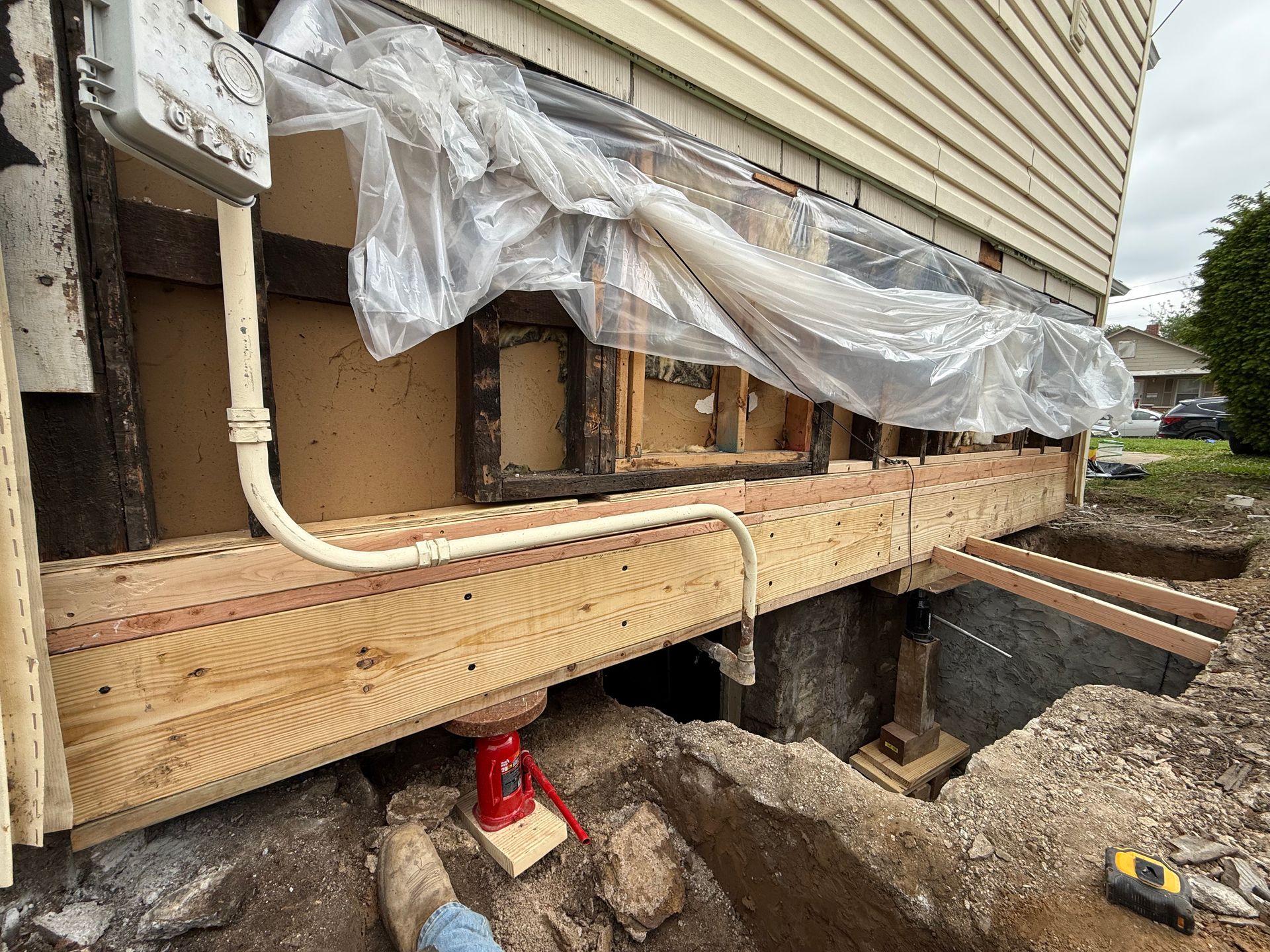
The structural framework of a home includes floor joists, rim boards, blocking, bridging, and the connections between each component. When one element fails — whether from moisture intrusion, age-related wood fatigue, or an undersized original installation — the load shifts to adjacent members that were not designed to carry it. Crawl spaces that experience groundwater fluctuation are a common source of this degradation, as persistent humidity accelerates wood fiber breakdown from the bottom chord of floor systems upward. A proper evaluation identifies which members have lost structural capacity, which connections need reinforcement, and whether sistering, blocking, or full replacement is the appropriate corrective approach.
Request a structural assessment to determine which framework components are underperforming in your home.
What Proper Structural Framework Repair Requires
Repairing a structural framework begins with load path analysis — tracing how weight from the roof, floors, and occupant load travels through the system and identifying where that path is interrupted or weakened. Each repair decision depends on what the evaluation reveals: a single deflected joist may only require sistering with a matching member fastened along its full length, while a rim board that has separated from its sill plate may require re-anchoring with structural hardware and sill seal replacement to prevent recurrence. The distinction between a cosmetic fix and a structural repair lies in whether the load-carrying capacity is actually restored.
After the work is complete, floors that previously flexed under foot traffic will return to a consistent feel, and door frames or window openings that shifted due to nearby framing movement will stabilize. Steadfast Structural LLC documents the scope of each repair so homeowners have a clear record of which members were addressed and what corrective method was used — information that matters during future inspections or real estate transactions.
The scope of structural framework repair can range from isolated joist correction to broader reinforcement of an entire floor bay. Factors that affect the approach include the span length, the existing lumber species and grade, the load above the affected area, and whether the underlying cause — typically moisture — has been resolved before framing corrections are made.
Common Questions About Structural Framework Services
Homeowners in Belton often ask about structural framework services before scheduling an assessment. Here are answers to the questions that come up most frequently.
What does a structural framework assessment actually involve?
A technician inspects the floor system, support posts, beams, joists, and connecting hardware to identify deflection, separation, rot, or undersized members. The evaluation identifies both active failures and areas where capacity has been reduced but not yet failed.
How do I know if my floor problem is structural or cosmetic?
Floors that bounce or deflect when walked on, that squeak in the same location consistently, or that show a visible dip of more than an inch across a span are typically structural issues rather than surface-level subfloor concerns.
When is sistering a joist sufficient versus replacing the member entirely?
Sistering works when the original member retains enough intact wood fiber to transfer the fastener load — typically when damage is limited to one face or end. If more than a third of the cross-section is compromised, full replacement is generally the appropriate call.
How does climate affect wood framing over time?
The freeze-thaw cycle and seasonal humidity variations in the Kansas City metro region cause repeated expansion and contraction in wood framing. Crawl spaces without vapor barriers are particularly vulnerable, as ground moisture migrates upward and keeps wood fiber in a consistently elevated moisture state.
Why do blocking and bridging matter in floor systems?
Blocking and bridging transfer lateral loads between joists, preventing individual members from rotating under point loads. When they are missing or have failed, joists deflect more than they would in a properly braced assembly, which compounds the wear on connections over time.
Steadfast Structural LLC can walk through the specific conditions in your home and identify which framework components need attention. Schedule a consultation to review your floor system and determine the appropriate repair scope.