
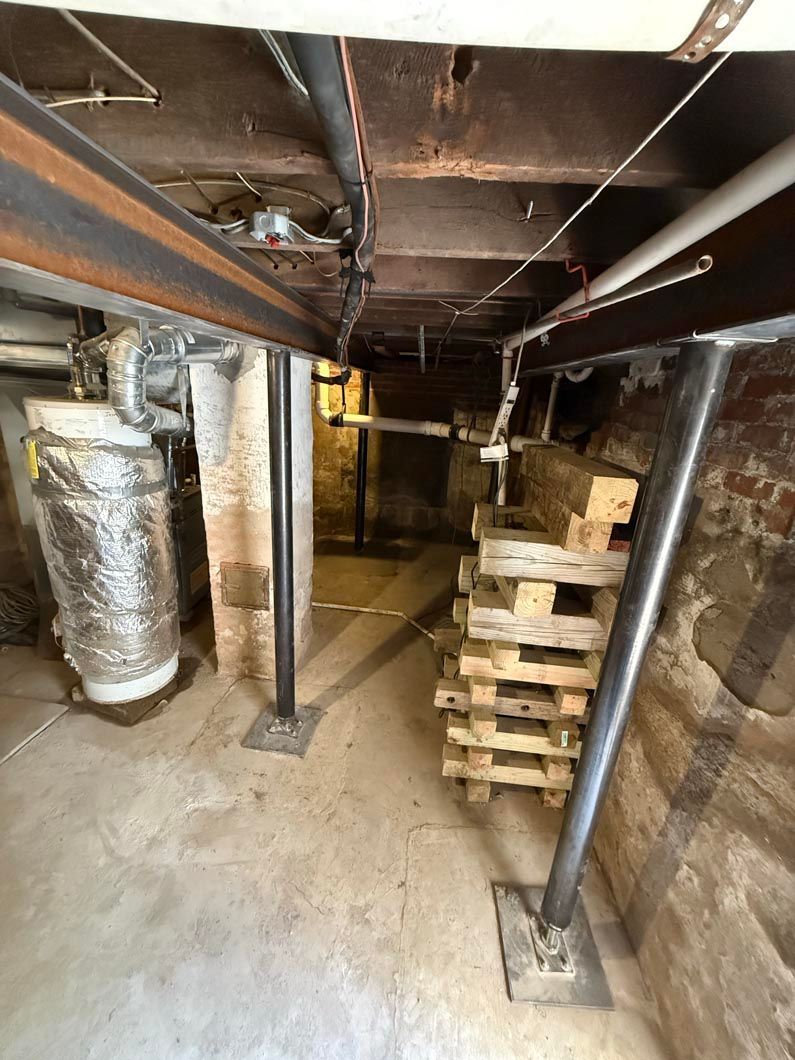
Structural Loads Supported Through Engineered Beam Placement
Overhead and Load Bearing Beam Installation in Kansas City for renovations requiring wall removal and structural upgrades
Load bearing beams carry the weight of upper floors, roofs, and structural components, transferring those forces through columns to the foundation. Steadfast Structural LLC installs overhead and load bearing beams in Kansas City homes during renovations that remove interior walls, create open floor plans, or require additional structural support where existing framing is inadequate. Without proper beam installation, removing a load bearing wall causes floors to sag, ceilings to crack, and structural instability that compromises safety throughout the home.
The installation process integrates new beams with existing framing systems, ensuring proper weight distribution and long-term structural performance. Engineers calculate required beam size based on span length, load magnitude, and how the beam connects to surrounding structural elements. Temporary support holds loads during installation to prevent deflection while the new beam is positioned and secured.
Schedule a consultation to review your renovation plans and determine beam requirements for safe structural modifications.
How Load Bearing Beams Integrate with Existing Framing
Beam installation begins with detailed planning to identify load paths, calculate required beam capacity, and determine support column locations that transfer loads to the foundation without overstressing floor systems. Steel or engineered lumber beams are selected based on span requirements and architectural constraints, and installation involves removing sections of existing framing, positioning the beam, and securing connections that distribute loads properly. The work must meet structural code requirements and often requires inspection to verify compliance.
After installation, you gain open floor space where walls previously divided rooms, with ceilings and floors remaining level because the beam carries loads that the removed wall once supported. The structure performs safely under normal use and occupancy loads, with no sagging or deflection in areas where the beam spans. Upper floors remain stable, and finishes applied after the renovation stay intact because the framing no longer shifts.
Some projects require additional reinforcement of existing joists or installation of multiple beams when loads are particularly heavy or spans are long. Beam placement must account for plumbing, ductwork, and electrical systems that run through framing cavities, requiring coordination to avoid conflicts and maintain proper clearances.
Questions Before Starting Your Project
Beam installation projects involve structural decisions that affect renovation feasibility and long-term home performance. The following questions address common concerns about load bearing beam work and what the installation accomplishes.
What determines whether a wall is load bearing and requires a beam for removal?
Load bearing walls carry weight from upper floors or the roof down to the foundation, typically running perpendicular to floor joists, and their removal requires a beam to assume the loads the wall previously supported.
How are beam sizes calculated for specific renovation projects?
Engineers analyze the span length the beam must cover, calculate total loads from floors and roofs above, and select beam dimensions and materials that provide adequate strength with appropriate safety margins based on structural codes.
When do renovations in Kansas City require structural engineering and permits?
Removing load bearing walls, altering structural framing, or installing new support beams typically requires engineered plans and building permits to ensure work meets safety standards and complies with local construction codes.
Why do some beam installations require new support columns in basements or crawl spaces?
Beams transfer loads to support points, and when the span is long or loads are heavy, intermediate columns are necessary to prevent excessive deflection and ensure the beam performs within safe stress limits.
What does proper weight distribution prevent during and after renovations?
Proper distribution prevents sagging floors, cracked ceilings, sticking doors, and structural movement that damages finishes, while ensuring the building continues to meet load-bearing requirements throughout its service life.
Steadfast Structural LLC works with existing framing to integrate new support systems that meet structural requirements and align with your renovation goals. Call us at (816) 213-1505 to discuss beam installation needs and receive detailed planning for your structural upgrade project.